Hana gives birth to and loses Světla at Ravensbrück
The Glass RoomHana gives birth to and loses Světla at Ravensbrück: a history of forced separation and maternal love that Hana has kept secret for decades, until she tells Zdenka in the Glass Room. The disclosure turns a private wound into an act of witness. Hana’s daughter is taken from her in the camp, yet the imagined possibility of reunion gives Hana a reason to survive; when she finally speaks, the past enters the present with a force that unsettles the room’s ideal of transparency and defeats any denial of history.
Arrest, Deportation, and Birth
Hana’s account begins with her arrest and removal to what she calls hell. Before her imprisonment, she had believed herself barren. She had wanted a child, but had not conceived with her husband or with other men. The child’s father was a German scientist she had mentioned before; he wanted nothing to do with the pregnancy, but Hana wanted the baby. Her conception therefore brings hope in circumstances already marked by abandonment, without making the child’s father a source of support.
After Hana is arrested, she wants the baby even more. She is taken first to a place in Austria near Linz, then transported with many other people in cattle trucks across Germany. They end up somewhere north of Berlin, though at the time she knows only a wilderness of barbed wire and rows of huts. Women in Hana’s hut look after her. Her recollection holds the camp’s chaos beside this improvised care: women give birth and care for one another amid conditions in which, as she says, all sorts of things happen.
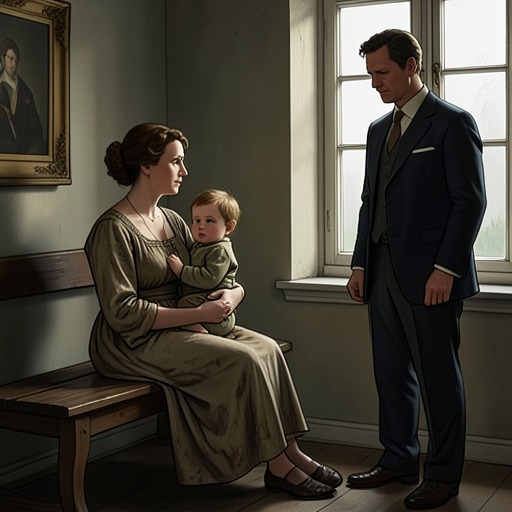
Hana’s daughter is born in Ravensbrück. She remembers the baby’s dark hair, wrinkled face, and short, sharp cry, which sounded as though she were gasping for air. Hana names her Světla, meaning light in the darkness. The name gives expression to a love that arrives inside a place Hana understands as hell: in the midst of confinement and deprivation, she has found someone to love.
Separation and the Will to Survive
The camp authorities put Světla to Hana’s breast for a while. The baby tries to feed, but Hana has no milk. Then they take the child away. Hana never sees her again. She distinguishes this loss from a later camp practice: a maternity hut where women could keep their babies for as long as the children lasted. When Světla is born, that arrangement does not exist for Hana; the babies are simply taken.
Hana imagines that Světla might somehow survive and that mother and daughter could be reunited after the war. The reunion never becomes an established fact in her account; it remains a fantasy she uses to continue living. Hana reasons that if she dies, her part in that imagined future cannot be fulfilled. In this way, the daughter she has lost becomes a reason to survive. Hana says that Světla saved her life, not by returning, but through the hope of a reunion that keeps her oriented toward the future.
The Confession in the Glass Room
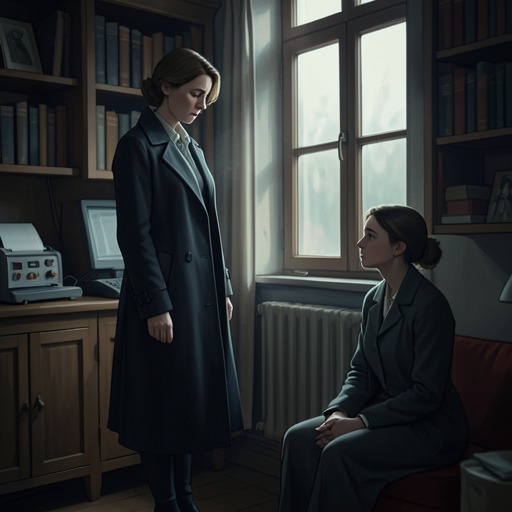
Long afterward, Hana tells Zdenka that she has never told anyone what happened. Zdenka has expected the two women to return to their previous conversation about Hana’s love and its difficulties. Instead, Hana reveals the birth in the camp. Her cautious handling of the coffee glass and the silence after the revelation frame the story as a disclosure Hana has prepared herself to make, though its consequences cannot be made easy by telling.
Hana’s account comes in fragments of recollection: the German scientist, the transport, the huts, Světla’s appearance and cry, and the moment the child is taken. Her face becomes rigid, like that of a mourner at a graveside, and she looks away through the window. She explains that she wanted Zdenka to know, as though the knowledge were a small, fragile, precious gift. When she tells of the baby’s removal, she gasps for air and weeps slowly, without dramatic convulsion. The years of silence do not lessen the loss; they make the act of speaking part of the event’s meaning.
Zdenka responds first with bodily distress. The confession hits her with almost physical force; she feels tears sting and can manage only Hana’s diminutive name, Haničko. She cannot find words of comfort. Later, as Hana weeps, Zdenka goes around the table and puts her arms around her, trying to comfort her. The encounter moves from testimony that leaves the listener nearly breathless to physical consolation that cannot undo what happened.
History in the Glass Room
The setting sharpens the contrast between the room’s appearance and the history disclosed within it. The Glass Room seems to promise openness and transparency, as though lies could not survive there. Yet Hana has carried an unsaid truth into this space, and the confession arrives not as an abstract account but through her faltering breath, rigid expression, and tears. Glass does not make her history immediately visible; it becomes a place where long-concealed experience can at last be heard.
The room itself is a modernist construction of glass, concrete, and chrome, with an onyx wall, tropical-hardwood partitions, and milky petal-shaped ceiling lights. Designed by Rainer von Abt, it was once so modern; in Hana’s presence and grief, it is now imbued with the past. Its built surfaces hold an earlier vision of modernity while the conversation brings the violence of the camp into the present. Against Hana’s testimony, the myth of Ondine is nothing and Tomáš’s denial of history is merely a fancy. The daughter’s loss, the hope that helped Hana survive, and the years in which she told no one establish the past not as a remote abstraction but as a history still borne in Hana’s face and body.